Nonprofit Website Hosting: What It Has to Do, and What It Costs
connectNPO · Updated September 2026
Key takeaways
- On our plan, hosting is not a line of its own. On September 22, 2026 we measured the eight sample sites we run: each home page is built from 17 to 21 separate files, mostly photographs, adding up to 228 to 673 KB of download.
- Measured from California with curl, those eight pages began answering in 233 to 344 thousandths of a second, and 121 to 214 on a second request, every one served from the page cache through Cloudflare. What differs between them is the weight of the photographs.
- Free hosting for nonprofits is real, and the program we read sets conditions worth knowing: InterServer asks for verified 501(c)(3) status, a Powered by InterServer link on your site and re-verification when InterServer asks for it, and the domain is billed separately.
- Check that a program still exists before you plan around it. On September 22, 2026, three DreamHost addresses for its free nonprofit hosting returned 404 and its help-center search found nothing, although search results and AI answers still name the program.
- What hosting does not do is keep your site true: updates, backups you have tested, and taking down last spring’s event. connectNPO includes hosting, the domain renewal up to $25 a year, weekly backups and every change in one plan at $180 a month.
The renewal notice from the host arrives in February, at the full price rather than the introductory one, for a plan someone chose because the first year was cheap.
Search for nonprofit website hosting and the answer comes back as a list of hosts, some of them free for charities. The list is useful, and it answers a smaller question than the one being asked. A host is a shelf. What decides whether your website works next March is what sits on the shelf and who dusts it.
This guide covers what hosting has to do for a nonprofit site, what the free programs ask in return, and what we measured on the eight sample sites we run ourselves.
What nonprofit website hosting has to do
A nonprofit website needs a host that keeps the site online, serves it securely, keeps backups it can restore, runs current software, holds the settings your web address and email depend on, and loads quickly on a phone. Everything past that is convenience.

The seven jobs hosting has to do
Written out, the list is short enough to check a quote against.
01
Stay online
And tell you when it did not.
02
Keep it secure
The padlock in the address bar, on a certificate that renews itself.
03
Keep backups
On a schedule, and restored once so you know they work.
04
Run current software
Server software as well as the site.
05
Hold your settings
The records your web address and your email depend on.
06
Absorb a busy day
A ready-made copy of each page, served without building it again.
07
Let you leave
A copy of the files and database, on the terms you agreed.
The last one matters more than it looks. Your site should be portable: our own service agreement says the domain stays registered in your organization’s name, and that after twelve monthly payments the site leaves with you at no charge, as a complete copy of files and database within ten business days of your request.
Free hosting for nonprofits, and what to check
Free hosting is like a donated office: worth having, as long as you read what the lease asks in return.
Free and discounted hosting for charities is real. InterServer publishes the clearest example: free standard hosting for verified 501(c)(3) organizations, with a required Powered by InterServer link on the site, re-verification when asked, and domain registration billed separately. TechSoup lists discounted website tools with its own administrative fees.
Two things are worth doing before you plan around a program. Read what it asks for in return, since a required link and a yearly re-verification are conditions, not fine print. Then check that the program still exists. Search results and AI answers for this question name DreamHost’s free hosting for charities; on September 22, 2026 the page at dreamhost.com/hosting/non-profit/ returned a 404, two help-center addresses for the nonprofit discount returned 404, and a help-center search for “nonprofit discount” returned no results. The program may well still exist through support; the point is that a roundup is not evidence, so ask the host.
What we measured on the eight sites we run
We run eight sample sites for invented organizations, on ordinary shared hosting, behind a page cache and proxied through Cloudflare. Here is what a visitor actually downloads, measured on September 22, 2026.
| Sample site | Page weight | Files | Page text | Photographs | Answer time, second request |
|---|---|---|---|---|---|
| Quarry Road Food Pantry | 228 KB | 17 | 16 KB | 104 KB | 192 ms |
| Kestrel Youth Center | 370 KB | 17 | 14 KB | 290 KB | 183 ms |
| Larkspur Family Counseling | 464 KB | 18 | 14 KB | 288 KB | 193 ms |
| Old Ferry Playhouse | 468 KB | 17 | 14 KB | 339 KB | 127 ms |
| Tenmile Youth Soccer Club | 570 KB | 17 | 15 KB | 478 KB | 122 ms |
| Wren Valley Scholarship Foundation | 597 KB | 18 | 13 KB | 482 KB | 214 ms |
| Harborlight Youth Arts | 628 KB | 19 | 14 KB | 434 KB | 121 ms |
| Copper Ridge Animal Rescue | 673 KB | 21 | 18 KB | 516 KB | 133 ms |
Measured on September 22, 2026 from Los Angeles. Page weight, file counts and byte totals come from a headless Chrome load with the browser cache off; the answer times come from two curl requests per site, both served from the page cache through Cloudflare, so they are edge times rather than origin times. On the Chrome run, with the cache disabled, first-byte times ranged from 246 to 1,419 milliseconds. Your figures will differ by location and by how many photographs a page carries.
The shape is the same on all eight: 17 to 21 files per page, two design files, one small script, and a page of text and markup between 13 and 18 KB. The difference between the lightest site and the heaviest is almost entirely photographs.
A small page is what makes hosting cheap
A grocery bag is easy to carry until you add the melon. Pages are the same. A page built from a few hundred kilobytes will feel quick on almost any host; a page that pulls three megabytes of plugins and uncompressed photographs will feel slow on an expensive one.
That is where hosting money is saved: not by buying a bigger plan, but by sending less. Photographs resized and saved in a compact format, one design file instead of five, and a ready-made copy of each page waiting to be served. The eight sites above keep 104 to 516 KB of images on the home page, and the images are still the largest part of every one.
Hosting is included, and so is the work around it
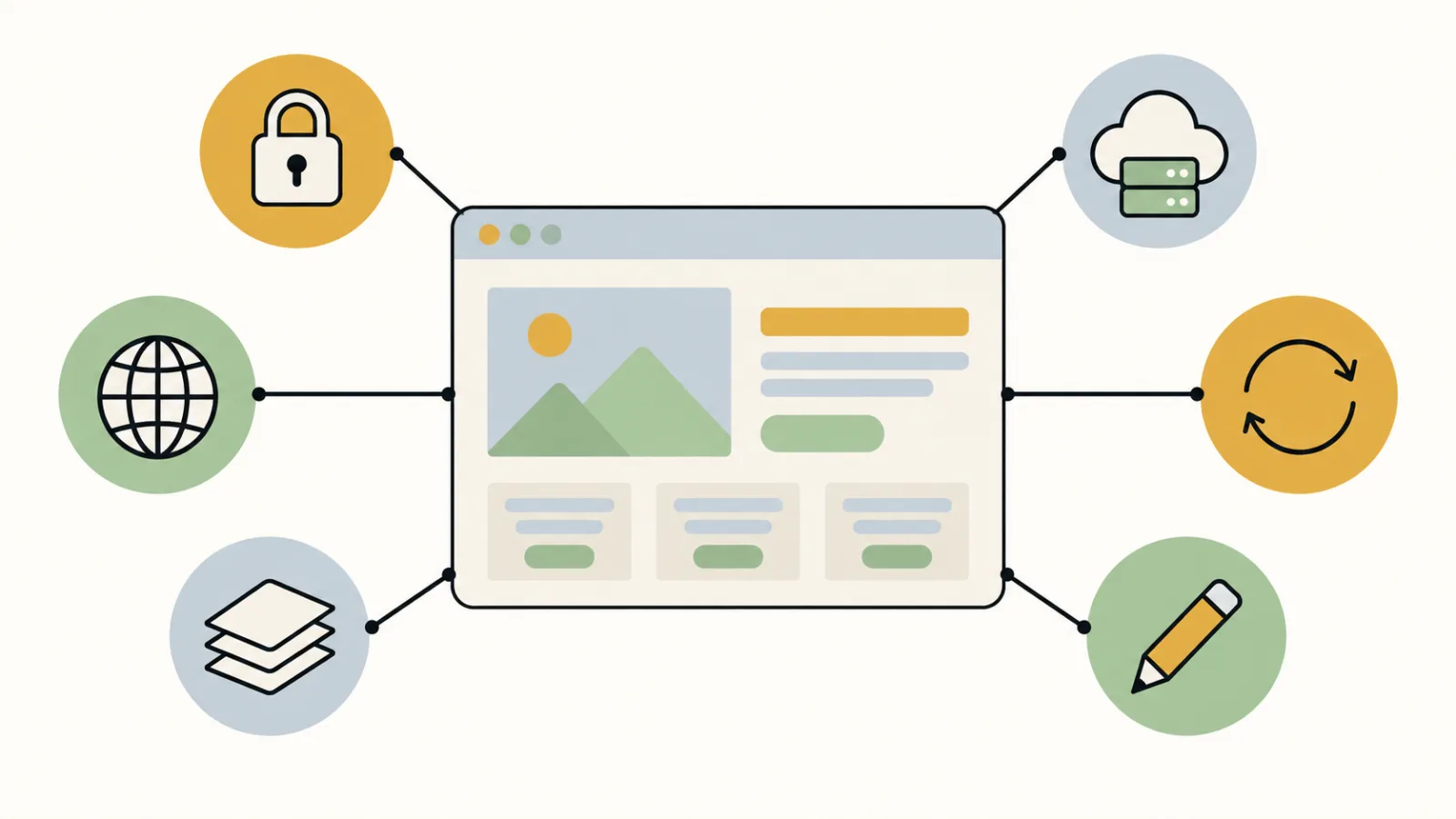
Hosting, the domain renewal up to $25 a year, weekly backups, software updates and every change you send us, in one plan at $180 a month.
The part hosting cannot do for you
No host takes down last spring’s event. In our count of 150 small California nonprofit websites, 37 showed something plainly out of date, and the most common signal was an event or deadline more than 30 days past still shown as upcoming or open. Those sites were hosted and online; what had slipped was what they said.
So when a budget line says hosting, it is worth asking what else is in it: who applies the updates, who tests the backups, who edits the page. Our own breakdown of those parts is in what a nonprofit website costs each year, what a site needs to carry is in what should be on a nonprofit website, and how to publish numbers a funder can check is in nonprofit impact report examples.
What hosting costs inside our plan
On our plan the hosting line is not separate. $180 a month covers hosting, the domain renewal up to $25 a year, backups at least weekly, software updates, and every change you send us. The build fee is $1,000, paid only once you approve the finished site, so the first payment is $1,180 and the first year comes to $3,160.
The domain, your web address, is registered in your organization’s name. After twelve monthly payments the site leaves with you at no charge, built to run on WordPress with free add-ons, so there is nothing to buy again later. If you would rather run it yourself, WordPress for nonprofits covers what that takes; if a builder is the better fit, so do our guides to Wix and Squarespace for nonprofits.
Questions to ask a host before you sign up
Whoever you host with, these six answers are the ones to have in writing before the first payment.
The last question is the one to put in writing: ask what the price is after the first term. The same question applies on a builder: Wix’s help center states plainly that a Wix site must be hosted and operated on Wix’s own servers, so the renewal price and the platform are one decision, not two.
The domain also carries your email. If you plan to use Google Workspace for Nonprofits, Google reviews the website on that domain first; our Google Workspace for nonprofits guide shows what it checks and how 657 small nonprofit sites measured up.
Frequently asked questions
What does a nonprofit website need from hosting?
It needs to keep the site online, serve it securely (the padlock in the address bar), keep backups that have been restored at least once, run current software, hold the settings your web address and email depend on, and load quickly on a phone. The rest is convenience.
Is there free web hosting for nonprofits?
Yes, some hosts run free or discounted programs for verified charities. Read what a program asks in return: InterServer asks for a link back on your site and re-verification when it asks for it, and the domain is billed separately. Check that the program page still exists before planning around it.
How much should a small nonprofit pay for hosting?
Less than the work around it costs. Updates, backups, changes and the yearly refresh add up to more than the server does, whoever performs them. As one example, our plan bundles hosting, the domain renewal up to 25 dollars a year and all of that work into 180 dollars a month.
Does a website builder include hosting?
On a builder, hosting comes with the platform because the site runs on its servers. Wix states in its own help center that a Wix site must be hosted and operated on Wix servers, while the domain can be bought and managed elsewhere. That is a trade you should make on purpose.
How fast should a nonprofit home page be?
Fast enough that a visitor on a phone does not wait. The weight of the page is the part you control. The eight sample sites we run load a home page of 228 to 673 KB, and the photographs are the largest part of every one.
See your finished website before you pay for it.
Hosting, domain, backups and updates are in the plan. You pay nothing until you approve the finished site; the first payment is then $1,180 (the build fee plus the first month), and $180 a month after that.
See the plan and apply →Measurements were taken from Los Angeles on September 22, 2026: page weight with headless Chrome, answer times with curl, as the note under the table explains. Host programs and their conditions were read on the same day from each company’s own pages. The eight sample organizations are fictional, built by connectNPO. This guide is general information, not legal advice.